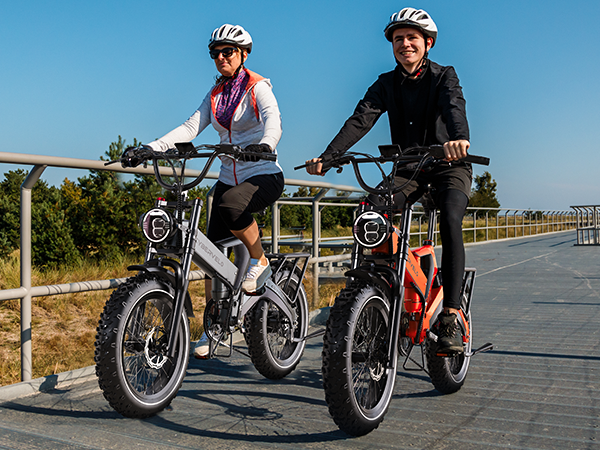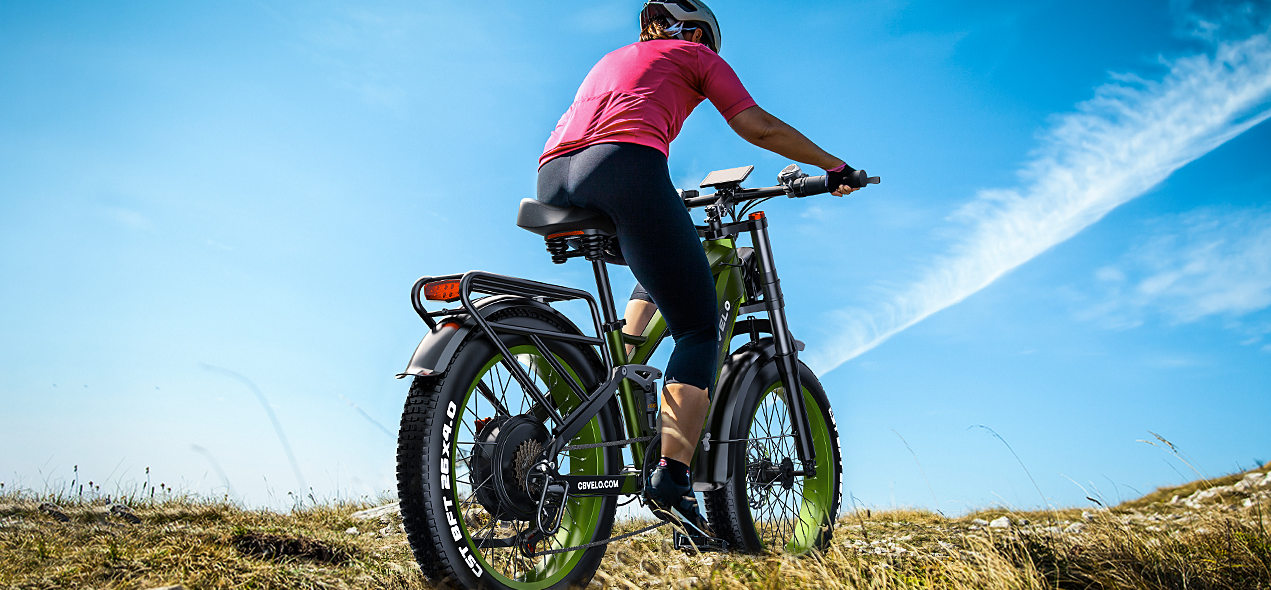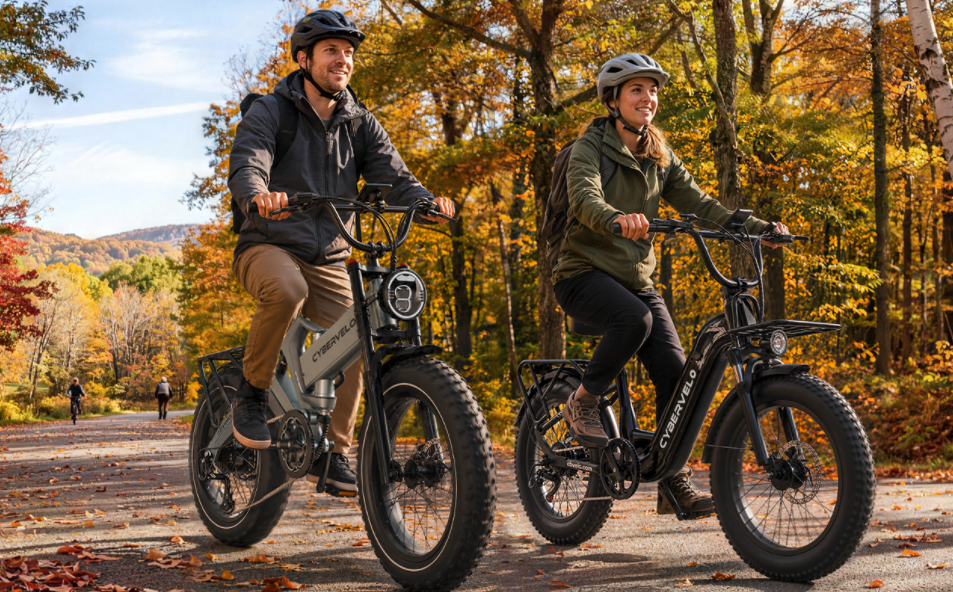
Fall brings crisp air, golden leaves, and ideal temperatures for outdoor exploration. It is arguably the best season for electric bike enthusiasts. However, autumn rides also present unique challenges. Falling leaves make trail traction unpredictable, chilly mornings require packing extra gear, and shorter daylight hours mean you need a ride that won’t leave you stranded with a dead battery miles away from home.
If you are looking to upgrade your setup this season, selecting the right e-bike comes down to matching your riding style with key specs like battery capacity, suspension performance, and frame portability. Below is a breakdown of how to evaluate your autumn riding needs and which setups deliver the best experience on the trail.
Key Factors to Consider for Autumn E-Bike Trips
Before hitting the trails, evaluating how your bike handles autumn conditions can save you from a ruined weekend.
1. Battery Range and Cold-Weather Efficiency
Colder autumn temperatures can temporarily reduce lithium-ion battery efficiency. If you plan full-day scenic tours or trail rides, look for bikes equipped with higher amp-hour (Ah) capacity. A high-capacity 48V battery ensures you maintain sufficient power even when climbing steep inclines or pushing through cold headwinds.
2. Tire Traction on Wet and Leaf-Covered Paths
Crisp autumn paths often hide mud, damp leaves, or loose gravel. Wide fat tires (such as 20×4.0 or 20×3.0 options) provide a significantly larger contact patch with the ground, giving you the grip and balance needed to prevent slippage on slick turns.
3. Suspension for Rough Terrain
Unpaved seasonal trails can be taxing on your joints. Having integrated shock absorption or a full dual suspension system smooths out unexpected bumps, roots, and rocks, keeping your ride comfortable across extended distances.
Top E-Bike Pick Breakdown for Fall Adventures
To help narrow down your choice, we’ve analyzed three distinct folding models designed for varying riding demands, ranges, and load requirements.
For Ultimate Distance & Heavy Off-Roading: Cybervelo EK6 Max
When long-range exploration is your top priority, power and suspension become non-negotiable. The EK6 Max is engineered specifically for riders who want to tackle aggressive trails without range anxiety.
- Massive Power & Range: Driven by a 1500W high-speed motor paired with a massive 48V 40Ah battery, this bike delivers a top speed of up to 40 MPH and an impressive max range of up to 120 miles.
- All-Terrain Control: Equipped with 20×4.0 fat tires featuring puncture-resistant lining and reflective strips, it provides reliable traction during low-light autumn evenings.
- Ride Comfort: A full dual suspension system paired with a lightweight magnesium alloy frame absorbs hard trail impacts, while the Shimano M315 8-speed trigger shifter allows smooth cadence adjustments on variable gradients.
- Braking Safety: Premium hydraulic disc brakes give you precise, instantaneous stopping power on wet or steep descents.
For Extended Weekend Camping & Cargo Storage: Cybervelo EK4
If your fall trips involve hauling gear, picnic supplies, or camping equipment for light off-road excursions, high battery reserves and sturdy frame durability are critical.
- Maximum Battery Reserve: The EK4 stands out with a heavy-duty 48V 50Ah battery configuration, supplying up to 80 miles of range and a top speed of 28 MPH via a 1000W peak motor.
- Durable & Portable: Constructed with a high carbon steel frame, this model balances rugged durability with a convenient foldable design, making it easy to store in an SUV trunk or RV bay.
- Versatile Handling: Featuring 20×3.0 tires and responsive disc brakes, it handles light off-road trails and paved bike paths with ease.
For Daily Commuting & Light Seasonal Trails: Cybervelo EK8
For riders seeking an agile, versatile option that easily transitions from urban streets to weekend park routes, a practical build with cargo expansion is ideal.
- Balanced Utility: Powered by a 1000W motor and a 48V 20Ah battery, the EK8 reaches speeds up to 28 MPH with an 80-mile max range.
- Comfort & Utility: Built on a high carbon steel frame with built-in frame shock absorbers and 20×4.0 fat tires, it glides comfortably over rough patches.
- Practical Cargo Setup: It supports the installation of a rear basket, making it perfect for carrying extra fall layers, groceries, or day-packs during weekend excursions.
Comparing the Fall Lineup
| Model | Motor & Speed | Battery & Range | Tire & Suspension | Primary Ideal Use |
| EK6 Max | 1500W / 40 MPH | 48V 40Ah / 120 Miles | 20×4.0 / Full Dual Suspension | Deep off-road, extreme range, high performance |
| EK4 | 1000W Peak / 28 MPH | 48V 50Ah / 80 Miles | 20×3.0 / Foldable Light Off-Road | Long-range touring, heavy gear transport |
| EK8 | 1000W / 28 MPH | 48V 20Ah / 80 Miles | 20×4.0 / Frame Shock Absorbers | Daily commuting, light trail excursions, rear basket utility |
Frequently Asked Questions About Autumn E-Bike Riding
Q: How do fat tires help on wet autumn trails?
A: Fat tires (3.0″ to 4.0″ wide) run on lower air pressure compared to standard road tires. This increases the rubber’s contact area on the ground, delivering superior grip over loose leaves, mud, and wet asphalt.
Q: Can I store a folding e-bike in my car trunk for road trips?
A: Yes. All three models mentioned feature foldable frame mechanics or compact footprints, making them easy to pack into a hatchback, SUV, or camper for autumn weekend getaways.
Q: How should I care for my e-bike battery during cooler weather?
A: Always store and charge your battery indoors at room temperature. Avoid charging cold batteries immediately after a chilly ride; let the battery warm up to room temperature first to protect its lifespan.
Choosing Your Ride This Season
Preparing for autumn riding is about finding the right balance between power, comfort, and range. Whether you need the high-speed, full-suspension performance of an all-terrain machine like the Cybervelo EK6 Max, the massive battery reserve of the EK4, or the daily practicality of the EK8, selecting a bike matched to your environment ensures every ride is smooth and safe.
Ready to explore the outdoors this fall? Check out full specifications, compare models, and find the perfect folding e-bike for your next adventure today.