标签: Cybervelo E-Bike

  • Fat Tire vs. Standard Electric Bikes: Which One Should You Buy

    Fat Tire vs. Standard Electric Bikes: Which One Should You Buy

    Buying an electric bike isn’t just about picking a frame style or a cool color. It usually comes down to one fundamental decision that dictates how your ride actually feels: Fat tire or standard tire?

    If you’ve been browsing e-bike options lately, you’ve probably noticed two distinct camps. On one side, you have sleek, traditional e-bikes built with classic 1.95-inch tires that zip through city traffic. On the other side, there are rugged machines sitting on wide 4.0-inch tires that look ready to tackle sand, snow, and rough forest trails.

    Choosing the wrong style often leads to buyer’s remorse. Buy a heavy fat-tire bike when you live on the third floor of a walk-up apartment, and you’ll hate carrying it every day. Pick a narrow-tire commuter when your route consists of gravel paths and broken pavement, and you’ll tire of the bumpy ride real fast.

    Let’s break down how these two tire styles perform in the real world—and help you figure out which one belongs in your garage.

    Understanding the Basics: Width Means Traction, Narrow Means Speed

    The distinction between these bikes comes down to air volume, contact patch, and weight.

    Standard commuter e-bikes typically run on tires around 1.95 inches wide. This setup minimizes rolling resistance, making the bike agile, responsive, and efficient on flat asphalt.

    Fat tire e-bikes step up to 4.0-inch tires. That extra width allows you to run much lower tire pressure (often between 15 to 20 PSI), which acts as a natural cushion against shocks, bumps, and loose terrain.

    Option 1: Standard Tire E-Bikes – The Ultimate Urban Efficiency

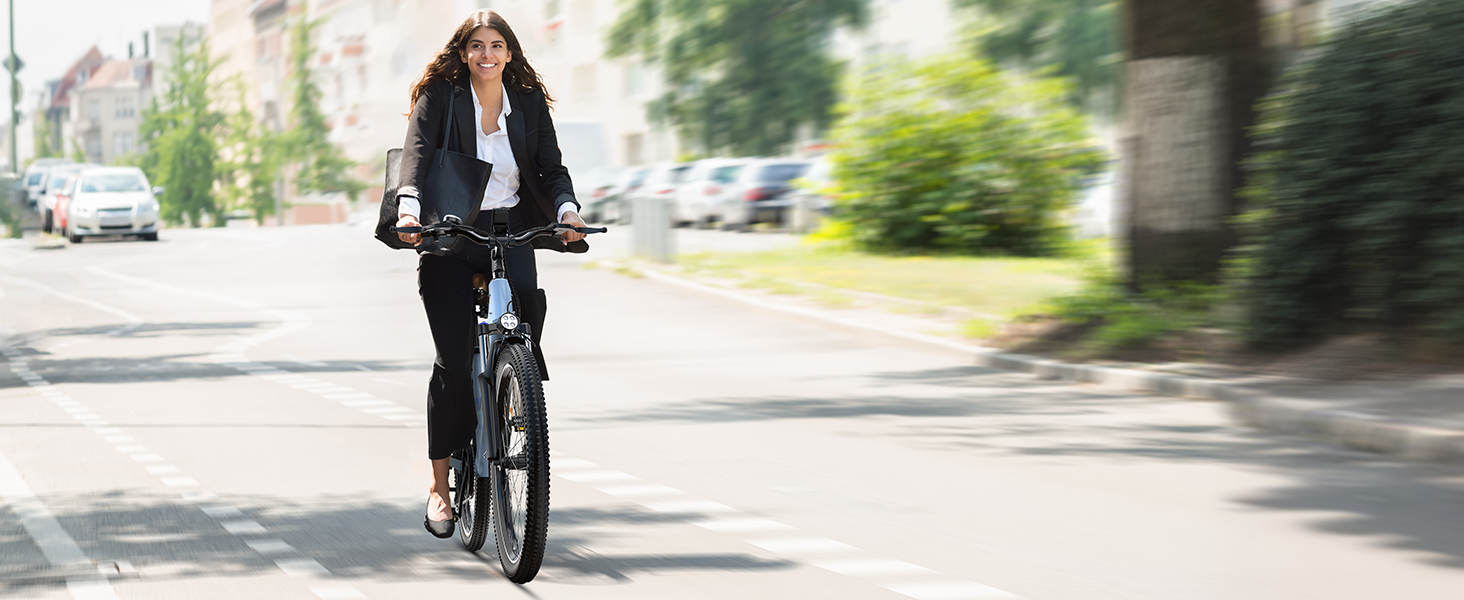
    If your daily life revolves around paved roads, bike lanes, grocery runs, and predictable urban commutes, standard tire bikes remain the benchmark for efficiency.

    Key Advantages:

    • Effortless Handling: Narrower tires turn on a dime. Navigating tight city corners, pedestrian walkways, and crowded bike racks feels completely natural.
    • Better Battery Range: Less friction between the rubber and the road means your motor doesn’t have to work as hard, stretching your battery life further per charge.
    • Lightweight & Portable: Standard frame builds weigh considerably less, making them far easier to hoist onto car racks or carry upstairs.

    Real-World Recommendations:

    For riders looking for a clean, accessible frame for daily errands, a step-through design like the Cybervelo EK2 Step-Through Ebike offers an upright seating position paired with nimble 26×1.95 tires. It lets you hop on and off effortlessly during quick stops around town.

    If you prefer a classic frame build with balanced weight distribution for longer pavement stretches, the Cybervelo EK3 Step-Over Ebike gives you that familiar road-bike geometry while keeping rolling resistance to a minimum.

    Option 2: Fat Tire E-Bikes – All-Terrain Stability and Maximum Comfort

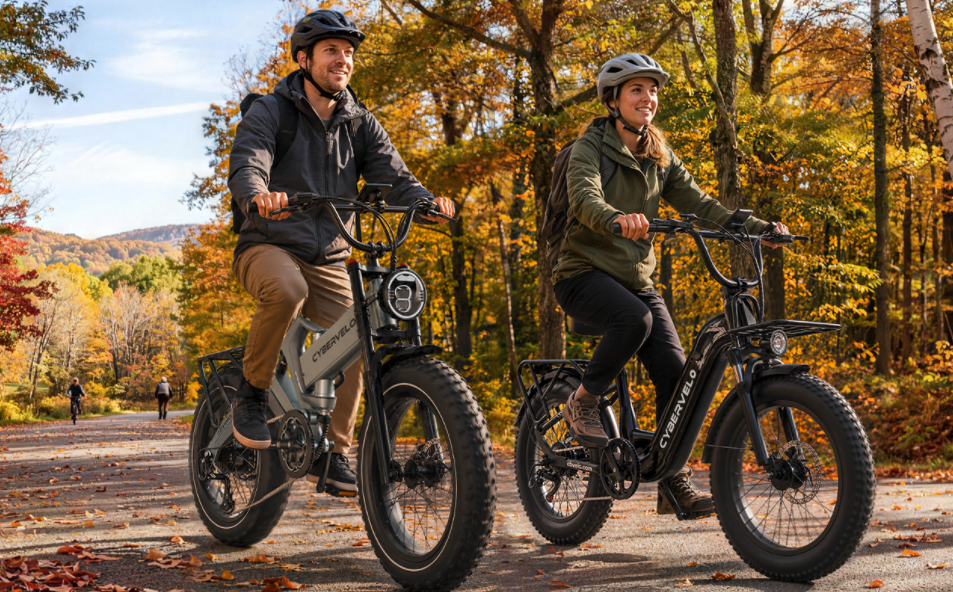
    Fat tire e-bikes weren’t made to set speed records on smooth tarmac. They were designed to go where standard bicycles start slipping and sinking.

    Key Advantages:

    • Built-in Suspension Effect: The massive air volume in 20×4.0 tires absorbs chatter from roots, cobblestones, and potholes long before it hits your handlebars.
    • Unmatched Traction: Broad rubber footprints grip soft sand, deep mud, wet leaves, and light snow with ease.
    • Rider Confidence: If you feel nervous about gravel patches or slippery road slick after rain, the wide footprint provides exceptional stability that stops the bike from washing out.

    Real-World Recommendations:

    When you want a compact frame that combines aggressive all-terrain capability with effortless mounting, a low step-thru option like the Cybervelo EK10 Step-Thru Ebike bridges the gap between stability and accessibility. Its 20×4.0 fat tires soak up rough terrain without making the bike feel towering or intimidating.

    For riders wanting a solid, sturdy utility build with broad tires designed for outdoor escapes and heavy weekend riding, check out the versatile Cybervelo EK8 Fat Tire Ebike.

    Head-to-Head Comparison: Which Fits Your Lifestyle?

    FeatureStandard Tire (e.g., 26×1.95)Fat Tire (e.g., 20×4.0)
    Best TerrainAsphalt, smooth pavement, light bike pathsSand, gravel, snow, rough trails, broken road
    Riding ComfortModerate (requires good paved roads or fork suspension)High (natural cushion from low PSI)
    Agility & SteeringFast, quick-turning, responsiveStable, planted, heavier turning feel
    Bike WeightLighter (easier to carry upstairs)Heavier (sturdier, planted on the road)
    Battery EfficiencyHigh (low rolling resistance)Moderate (higher rolling drag)

    Quick Buying Guide: How to Decide

    Ask yourself these three questions before placing an order:

    1. Where will you ride 80% of the time? If it’s paved suburban roads or city lanes, stick with the EK2 or EK3. If your route includes off-road trails, beaches, or winter slush, go with the EK8 or EK10.
    2. Do you need to lift your bike regularly? If you live upstairs or frequently put your bike on a standard trunk rack, the reduced weight of standard tires makes a noticeable difference.
    3. How much do you value balance and cushion? If you deal with lower back discomfort or feel uneasy on loose gravel, the forgiving nature of a 4.0-inch fat tire is well worth the extra weight.

    In Conclusion

    There is no single “best” e-bike—only the bike that fits your environment. Standard tire models like the Cybervelo EK2 and EK3 deliver unmatched efficiency and easy handling for everyday commuters. On the flip side, fat tire options like the EK8 and EK10 unlock total freedom off the beaten path, giving you all-season stability no matter what the weather throws at you.

    Assess your daily routes, consider your storage situation, and choose the ride that makes getting out on two wheels the best part of your day.

  • Best Fat Tire Electric Bikes for Beach Riding in Summer 2026

    Best Fat Tire Electric Bikes for Beach Riding in Summer 2026

    Riding an electric bike along the coast is easily one of the best parts of summer. But if you’ve ever tried taking a standard commuter bike onto loose sand, you know how quickly that dream turns into a messy drag. Narrow tires sink right in, motors overheat, and standard frames just can’t take the drag.

    That’s where fat tire e-bikes come into play. Designed with high-volume tires and torq-heavy hub motors, these machines float over loose surfaces instead of digging in.

    However, not every fat tire e-bike handles sand the same way. Wheel size, frame structure, and portability completely change how a bike performs on the coast. In this guide, we break down what actually matters when riding on sand and how to choose the right setup for your summer trips.

    What Makes an E-Bike Actually Work on Beach Sand?

    Before looking at specific models, it helps to understand why certain bikes handle loose sand while others get bogged down. Riding on loose sand demands three non-negotiable features:

    • Tire Volume & Air Pressure (PSI): The magic of a fat tire lies in high floatation. Running a 4.0-inch tire at a lower PSI (around 10–15 PSI) spreads the contact patch wide over loose terrain.
    • Low-End Torque: Deep sand creates high rolling resistance. You need a rear hub motor tuned for sustained torque rather than just top-end asphalt speed.
    • Frame Ergonomics & Clearance: Salt spray and sand grit beat up moving parts fast. High frame clearance and robust geometry keep your ride comfortable and lower maintenance overhead.

    Compact 20-Inch vs. Full-Sized 26-Inch: Which Fat Tire Size Do You Need?

    The biggest decision you’ll make comes down to wheel diameter: 20×4.0 inches versus 26×4.0 inches.

    Feature20″ x 4.0″ Fat Tire26″ x 4.0″ Fat Tire
    Best ForRV trips, storage, quick stopsLong coastal cruises, tall riders
    AgilityHigh (Nimble & lower center)Moderate (Smooth roll-over)
    Sand FloatationSolid (Requires proper PSI)Superior (Easier over deep sand)

    1. Compact & Portable: 20×4.0-Inch Fat Tire E-Bikes

    If you travel to the beach in an SUV, camper, or RV, hauling a full-sized electric bike can be a nightmare. Compact 20×4.0 fat tire bikes solve this by combining high traction with easy transport.

    • For Maximum Portability: If trunk space is tight, a foldable setup like the Cybervelo EK6 Folding Electric Bike allows you to tuck high-powered sand performance right into your vehicle without needing a heavy-duty tow hitch rack.
    • For Daily Versatility: If you want an agile, punchy ride that handles boardwalks, packed sand, and quick neighborhood runs, compact options like the Cybervelo EK8 and the rugged Cybervelo EK11 Fat Tire E-Bike deliver lower centers of gravity, making them exceptionally easy to handle for riders of all skill levels.

    2. Maximum Rollover: 26×4.0-Inch Fat Tire E-Bikes

    When you’re facing miles of continuous shorelines or deep dune paths, larger 26×4.0 tires offer unmatched momentum. The larger wheel diameter glides over ruts and soft patches with noticeably less effort.

    • For Long-Distance Beach Cruising: A full-frame model like the Cybervelo EK9 All-Terrain E-Bike provides full-sized stability and maximum traction, ideal for long coastal stretches.
    • For Easy Mounting & Relaxed Comfort: If you prefer a relaxed upright posture or hate fighting over a tall top tube when stopping in soft sand, a step-through geometry like the Cybervelo EK10 Step-Thru Ebike makes getting on and off effortless without sacrificing 26-inch performance.

    Crucial Tips for Maintenance After Riding Near Saltwater

    Saltwater mist and dry sand are brutal on mechanical components. If you want your e-bike to survive multiple summer seasons without corrosion, keep these quick steps in mind:

    1. Rinse with fresh water immediately: Never power wash with high pressure—just gentle freshwater spray to wash away salt dust from the chain, spokes, and brake calipers.
    2. Lube your chain dry: Use a dedicated dry chain lubricant that repels grit rather than attracting sand particles into your drivetrain.
    3. Check tire pressure before heading out: Keep tire pressure lower on soft sand for traction, but pump it back up when transitioning back to pavement to save battery range.

    Which Model Fits Your Riding Style?

    Choosing your ideal beach fat tire e-bike boils down to how you plan to transport it and where you ride most:

    • Choose a 20×4.0 model (EK6, EK8, EK11) if storage space is limited, you haul your bike in a vehicle trunk, or you prefer a nimble, punchy urban-to-beach hybrid.
    • Choose a 26×4.0 model (EK9, EK10) if your priority is maximum stability over soft dunes, comfortable long-distance cruising, or step-through mounting convenience.

    Ready to gear up for the beach season? Explore full specs and find the best match for your summer rides directly at the Cybervelo Electric Bike Collection.

  • How to Choose the Best E-Bike for Camping and Trail Riding

    How to Choose the Best E-Bike for Camping and Trail Riding

    You’ve set up your tent, the campfire is crackling, and the wilderness is waiting to be explored. But hiking on foot limits how far you can go, and driving your SUV on narrow, muddy trails is out of the question.

    This is where a rugged electric bike changes the game.

    An outdoor e-bike isn’t just a gadget; it’s your ticket to deeper exploration, allowing you to scout fishing spots, haul firewood, or simply chase the sunset without exhausting yourself. But with so many options on the market, which ride actually fits your camping style? Let’s break down what you need to look for and match you with the perfect rig for your next adventure.

    The Anatomy of a Perfect Camping E-Bike: What Actually Matters?

    Before throwing money at a shiny new ride, experienced campers look at three non-negotiable factors:

    • Portability: Can it fit in your trunk, RV rack, or truck bed alongside your coolers and tents?
    • Traction (Tire Size): Will it sink into the sand, gravel, and mud, or glide right over them?
    • Utility & Payload: Can you mount racks to carry your gear, extra water, or cooking supplies?

    For most outdoor enthusiasts, fat tire electric bikes are the gold standard. They provide the stability and traction needed when you leave the asphalt behind.

    Top Cybervelo E-Bikes for Your Camping Style

    Different campsites demand different rides. Whether you are tight on space in a camper van or looking to conquer rugged mountain trails, we’ve analyzed four stellar options from Cybervelo to help you make the right call.

    1. The Space-Saving Utility Beast: Cybervelo EK6 Max

    If you travel in a compact SUV or a crowded camper, space is at a premium. You need something that packs a punch but folds down easily.

    • Tire Size: 20×4.0″ (Fat Tires)
    • Best For: Campers who need a balance of heavy-duty traction and easy storage.
    • Why it works for camping: The Cybervelo EK6 Max combines the best of both worlds. Its $20 \times 4.0$-inch fat tires offer excellent shock absorption and grip on loose gravel, while its folding frame means you can tuck it into your trunk without needing a heavy-duty tow-hitch rack. It’s the ultimate “throw-and-go” camping companion.

    2. The Trail Conqueror: Cybervelo EK9 2.0

    For the adventurers who don’t just stay around the campsite but want to tackle serious backcountry trails and steep fire roads.

    • Tire Size: 26 x 4.0″ (Full-Sized Fat Tires)
    • Best For: Rough terrains, tall riders, and deep backcountry exploration.
    • Why it works for camping: If you’ve ever ridden a smaller bike over deep ruts, you know how bumpy it can get. The Cybervelo EK9 2.0 features massive 26-inch fat tires that roll over rocks, tree roots, and mud puddles with absolute ease. According to trail safety guidelines from organizations like the International Mountain Bicycling Association (IMBA), having proper tire volume and traction is crucial for maintaining control on shared backcountry trails. This bike gives you the confidence to explore further and safer.

    3. The Heavy-Duty Explorer: Cybervelo EK11

    Some camping trips require hauling heavy gear—coolers, fishing tackle, or even extra firewood. You need a sturdy frame that won’t flex under pressure.

    • Tire Size: 20×4.0″
    • Best For: Hauling gear and navigating technical, low-speed obstacles.
    • Why it works for camping: The Cybervelo EK11 is built like a tank. The compact 20-inch wheels keep the bike’s center of gravity low, making it incredibly stable even when fully loaded with gear. Its punchy motor ensures you won’t stall out when climbing steep slopes with a heavy backpack.

    4. The Agile Explorer: Cybervelo Mars700

    Maybe you don’t plan on riding through deep mud or loose sand, but you still want a comfortable, highly portable bike for cruising paved campground loops and hard-packed dirt roads.

    • Tire Size: 20×3.0″
    • Best For: Casual campground riding, paved paths, and light gravel.
    • Why it works for camping: The foldable Cybervelo Mars700 strikes a sweet spot. With 3.0-inch tires, it’s lighter and more nimble than a traditional fat bike, yet offers significantly more cushion and stability than a standard commuter bike. It’s incredibly easy to lift onto a rack or pack into a hatchback.

    Camping E-Bike Comparison at a Glance

    ModelTire SizeBest TerrainKey Advantage for Campers
    EK6 Max20×4.0″Gravel, Mud, SandFolding frame + Full fat tires
    EK9 2.026 x 4.0″Rugged Trails, RootsMaximum roll-over ability & comfort
    EK1120×4.0″Steep Slopes, CargoLow center of gravity, heavy-duty build
    Mars70020×3.0″Hard-pack Dirt, PavedLightweight, highly portable, nimble

    Quick Tips for E-Bike Camping Success

    • Check Local Regulations: Before you head out, verify the e-bike rules for your destination. The U.S. National Park Service has specific regulations regarding where Class 1, 2, and 3 e-bikes are allowed on public lands.
    • Protect Your Battery: Extreme cold or heat can drain your battery faster. If it’s going to be a freezing night, bring your e-bike battery inside your tent or RV.
    • Lock It Up: Campsites can be busy. Use a heavy-duty U-lock or chain lock to secure your bike to a tree or your vehicle’s trailer hitch when you’re sleeping or away from camp.

    The Verdict: Which One Should You Pack?

    Choosing the right e-bike comes down to where you camp and how you travel.

    If space is your biggest hurdle but you still want to tackle wild trails, grab the EK6 Max or the Mars700 for their folding convenience. If you are heading deep into the wilderness where the paths are rough and unforgiving, the full-sized EK9 2.0 is your best bet.

    Ready to elevate your outdoor adventures? Pick your model, pack your tent, and hit the trails.

  • Key Points to Consider Before Buying Your First Commuter E-Bike

    Key Points to Consider Before Buying Your First Commuter E-Bike

    Skipping the morning traffic gridlock and saving on gas sounds like a dream, right? That’s exactly why swapping a car or crowded subway for an electric bike has become the ultimate life hack for daily commuters. But when you start searching for the perfect ride, you are instantly hit with a wall of technical jargon—hub motors, battery watt-hours, frame geometries, and fat tires.

    For a daily commuter, you don’t just need a bike that moves; you need a reliable partner that gets you to the office without leaving you drenched in sweat or stranded with a dead battery. Let’s cut through the marketing fluff and look at how to choose a commuter ebike that actually fits your morning routine, your office space, and your city’s terrain.

    The Frame Design: Convenience vs. Traditional Ride

    The very first decision you’ll need to make is how you want to get on and off the bike. This might seem minor until you’re wearing office attire or carrying a heavy laptop backpack.

    • The Easy Access (Step-Through): If your route involves frequent stops, or if you prefer not to swing your leg high over a top tube, a step-through frame is a lifesaver. It offers a relaxed, upright riding position that keeps your posture stress-free. For a smooth, accessible daily glide, a geometry like the Cybervelo EK2 Step-Through Ebike makes hopping on and off effortless, even in formal clothes.
    • The Classic Stability (Step-Over): On the flip side, traditional step-over frames offer a bit more rigidity and a classic diamond-shape look that many riders prefer for high-speed stability. If you want that traditional bicycle feel paired with modern electric power, options like the Cybervelo EK3 Step-Over Ebike give you that sturdy, locked-in ride quality during longer stretches of open road.

    Storage and Multimodal Commuting: Do You Need to Fold It?

    Your commute isn’t just about the road; it’s also about where the bike goes when you aren’t riding it. Do you need to take it up a tight apartment elevator, stash it under your office desk, or chuck it into the trunk of a car?

    If space is your biggest constraint, a standard frame will quickly become a headache. This is where folding ebikes dominate. A compact option like the Cybervelo EK5 Folding Electric Bike can be collapsed in seconds, making it incredibly easy to bring inside the office rather than leaving it locked on a sketchy street corner.

    However, if your route is plagued by potholes, cracked asphalt, or gravel shortcuts, tiny wheels can feel bumpy. In that case, blending portability with ruggedness is key. You can opt for something like the Cybervelo EK4 Folding Fat Tire Electric Bike, which gives you the storage benefits of a folding bike but packs the shock absorption of wider tires to smooth out ugly city roads.

    Wheel Size and Terrain: Matching the Ride to Your Route

    Not all city streets are paved equally. The size and width of your tires dictate how much vibration reaches your hands and spine.

    For those blessed with long, relatively smooth bike lanes or tarmac paths, a classic sleek profile is ideal. A hybrid style with large, efficient wheels—similar to the design of the Cybervelo Mars700—rolls faster, maintains momentum beautifully, and mimics the fast-paced feel of a traditional road bike.

    If you prefer a balanced, everyday cruiser that sits comfortably right in the middle—offering solid stability without feeling bulky—a standard 26-inch utility build is the sweet spot. A versatile daily driver like the Cybervelo EK7 Through Ebike handles typical urban obstacles like curb transitions and light debris with absolute confidence.

    Real-World Commuter FAQs

    How do I handle riding an ebike in the rain?

    Most commuter ebikes feature solid water resistance ratings, but you should always look for models equipped with pre-installed fenders. Fenders keep dirty road water from spraying up onto your work clothes. According to urban cycling safety guidelines by the League of American Bicyclists, keeping your speed moderate in wet conditions is crucial because wet pavement drastically increases braking distances.

    What is the real range I can expect on a single charge?

    Manufacturers love to quote maximum ranges under perfect conditions. In reality, your range depends on your weight, how many hills you climb, and how much you rely on the throttle versus pedal assist. A good rule of thumb for peace of mind is to buy a bike with a rated range that is at least double your round-trip commute distance.

    Finding Your Perfect Office Ride

    Choosing the right commuter ebike comes down to mapping out your specific day. If your priority is easy mounting and comfort, go step-through. If you live in a small apartment or take the train halfway, look at a folding option. If your city infrastructure is rough, invest in wider tires.

    Take a close look at your daily route today, map out your storage options at work, and pick the ride that eliminates your morning stress instead of adding to it.